The Stroke Patient Who Played Piano Again (Because We Hacked Her Nervous System)
Doors Wednesday. 36 seats left.
No spam. Just Hang Dallas.
What this talk is about
The Hang Theory. A lecture series by Hang Dallas.
One speaker. One big idea. One good room.
Where · Times Ten Cellars.
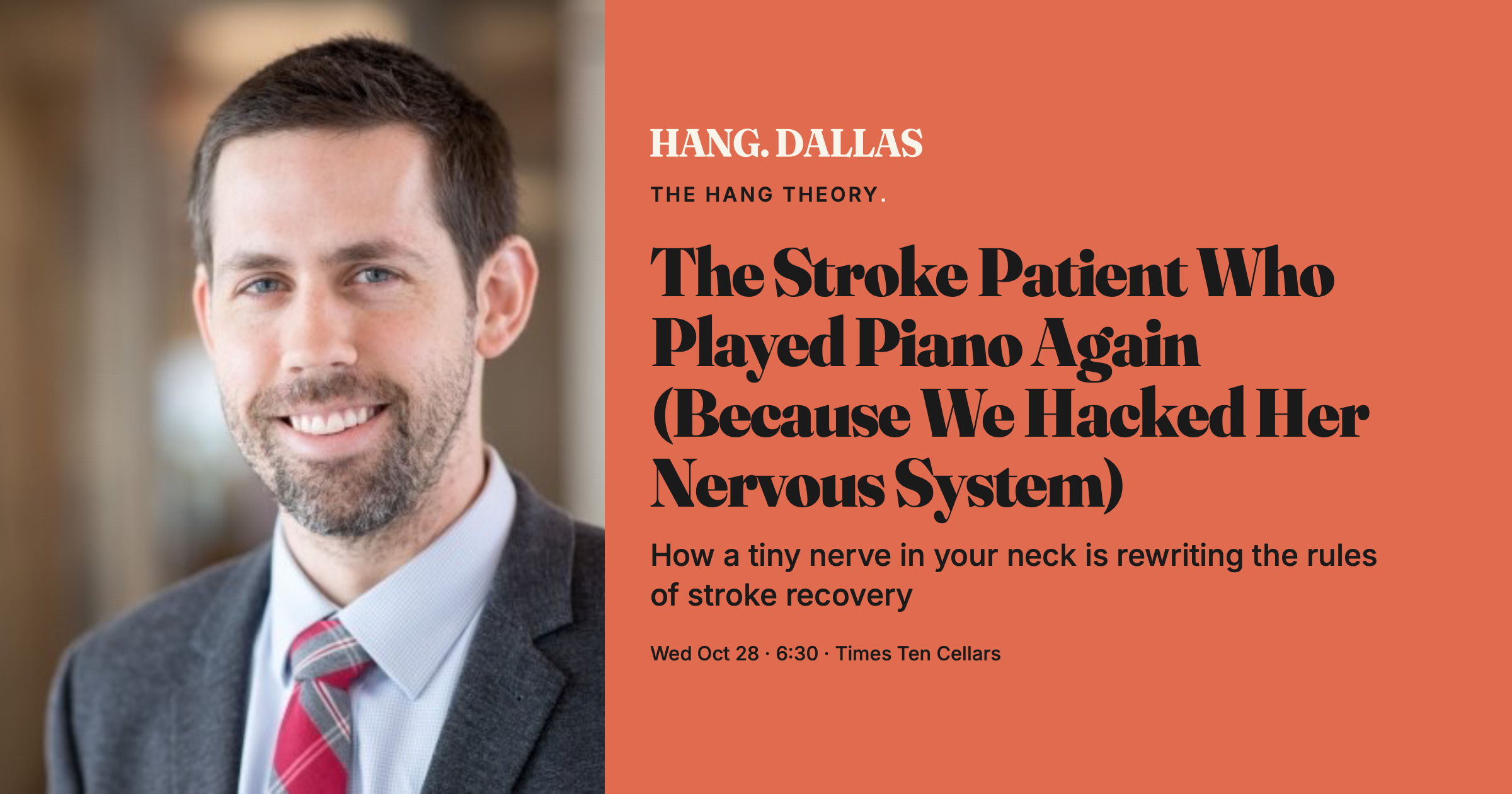
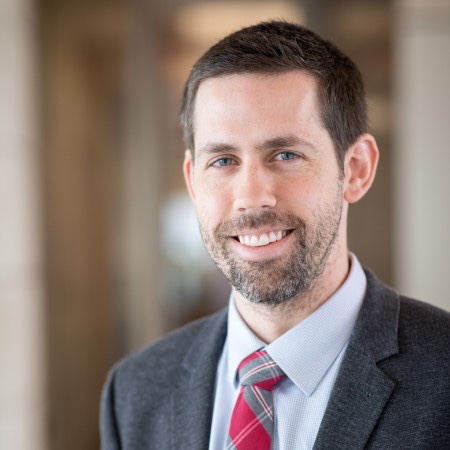
A woman who lost the ability to play piano after a stroke is playing again. The recovery didn't come from physical therapy alone. It came from a device that sends electrical pulses to a nerve in her neck while she practiced, a technique called vagus nerve stimulation paired with rehabilitation. Dr. Seth Hays walks through how this approach works, why a nerve that connects the brain to the gut and heart can influence motor recovery, and what the research shows about rewiring the brain after injury. The talk covers stroke, but the implications stretch to spinal cord injury and peripheral nerve damage. Dr. Hays is a Professor of Bioengineering at UT Dallas and former Eugene McDermott Distinguished Professor. He completed his Ph.D. In neuroscience at UT Southwestern Medical Center and leads research on vagus nerve stimulation as targeted plasticity therapy for stroke, spinal cord injury, and peripheral nerve injury.
How the night goes
Doors at 6:30 PM. Claim a seat, settle in.
We kick things off around 6:55 PM.
Dr. Hays takes the floor at 7:00 PM.
Questions from the room near 7:45 PM.
Then we linger. Meet the speaker, meet each other, around 8:00 PM.
Out by 8:30 PM.
Who's speaking
Seth Hays
More talks in Dallas
Not ready yet? We'll remind you before it starts.
We'll email you about this event. Newsletter only if you check the box.
Times Ten Cellars · Dallas, TX